
Today, we’re addressing the most frequently asked questions about flying with a baby (and keeping them safe!)

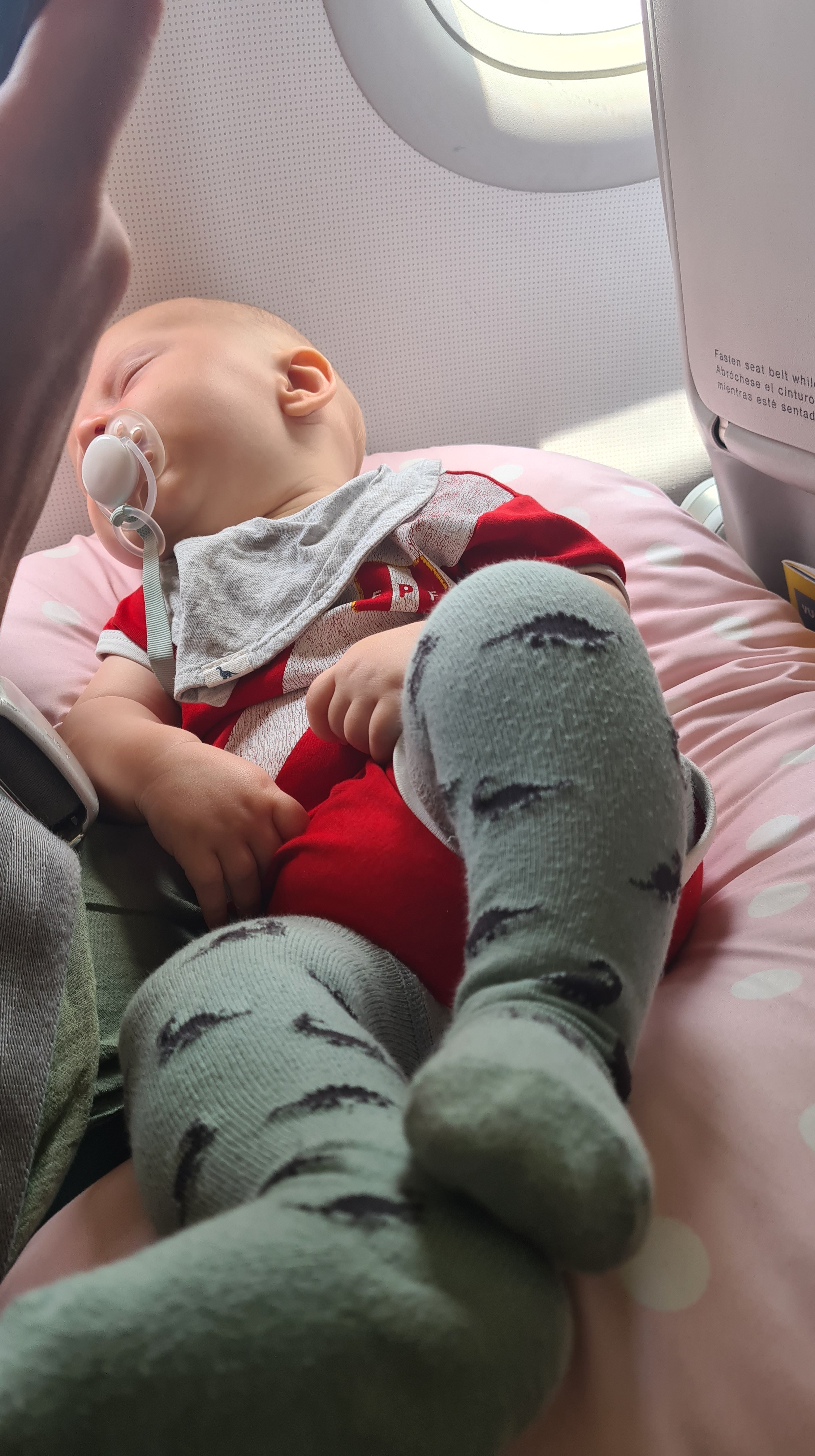
Here’s a picture of our baby, sound asleep on his 15th flight in less than 6 months.
When I was pregnant, a lot of people gave me their opinions (packaged as scientific fact) on the dangers of flying with a baby.
Whether he would develop cancer from the radiation, become deaf due to an inherent inability to equalize his ears, develop digestion issues due to the reduced pressure found aboard airplanes, or ruin everyone’s trips, we heard it.
Our baby’s first flight was at 5 weeks old. Since then, we have an impressive 26 flights under our diaper. Here are the questions we get asked the most regarding airline safety and babies.
As always, I’ve linked products throughout the article. I only link products we actually use. If you follow these links, I may earn money from your purchase. That money keeps the blog up and running.
Is flying with a Baby (or newborn) safe?

Yes! Flying with a baby is safe.
Most airlines reserve the right to refuse entry to their aircraft to infants younger than 7 days old. United Airlines will not fly with any infants younger than a week old, no matter what.
Babies born full-term with healthy, intact lungs and hearts can fly with no expected complications, but parents of premature babies, or babies with heart or lung conditions, should discuss any upcoming travel plans with their child’s doctor.
How early can I fly with my baby?
Flying with a baby of any age is safe. However, most airlines won’t allow babies under seven days of age to fly without explicit permission from their doctor. The CDC recommends that babies wait for their first round of vaccinations (at three months) before flying. This isn’t always possible—our baby had to fly to Bangkok at five weeks to apply for his passport. We could have taken a bus, but that would have taken us 18 hours.
Before booking anything, talk to your child’s pediatrician about your upcoming travel plans. They may have great tips on keeping your child healthy and happy while exploring the world. Before our first flight with our baby, we had a 4-week checkup with his doctor (and my Gyno!) We got permission from both doctors to fly to Bangkok, as well as the number for a great pediatrician in case of emergencies.
Then, we booked the flights.
How can I help my baby to equalize their ears?
The pressurized cabin environment on commercial flights is safe for babies and helps them (and us) with ear discomfort.

The AAP studied giving children medicine before flying to reduce ear pain and found it ineffective. Although I have heard that age-appropriate nose spray should help our little one with ear pressure, we’ll try that hack out on a later flight.
Preventing ear pain during take-off and landing is easy. Give the baby something to suckle or chew on during takeoff and landing. I typically breastfeed to help my baby keep clear their ears, but we also bring snacks, a water bottle, and something sweet for the baby, just in case he isn’t in a boob mood. on.
One final thing: Take-off and Landing is a long, slow process that can take 30 minutes. The most pressure build-up for our baby starts when we land, and that begins much earlier than when the crew makes us stow our tray tables!
What Seat is the Safest for my Baby?
Long-Haul flights mostly have baby bassinets provided for families sitting at the bulkhead seats. I don’t like the bulkhead or the bassinet – more information here.
The safest way for your child to fly is safely fastened in their own car seat, however, even the AAP doesn’t recommend flying in a car seat. This is partly to reduce the cost of airplane tickets and because the documented cases of injury during turbulence are so low. Lucky parents can gatecheck their carseat and ask the gate agent about seat openings – sometimes your child can fly in their own seat for free!
US-based Airlines will not provide you with an infant lap belt. European and Asian airlines do. Simply hook the infant lap belt through your seatbelt and around the baby’s waist. If you feel unsure about the lap belt, ask the flight attendant. They are there for your safety!
How can I keep my seat hygienic and clean during the flight?
Airplanes aren’t exactly the cleanest form of transportation. Bring disinfecting wipes to clean off your tray table, armrest, seatbelts, and whatever else your little one can (and will) put in their mouth.
Diaper changes can be challenging onboard an aircraft. Make sure to board the plane in a fresh diaper to reduce the probability of a change. The bathrooms with changing tables are typically located at the front of the aircraft.
We bring a portable Diaper Changing Pad onboard and keep it stocked up with two diapers, one packet of wipes, and an emergency onesie. We typically bring a diaper per hour of travel on board with us, as the baby can poo more on a plane than on the ground. Every airport I’ve been in has sold diapers and wipes.

5. Feeding
Some airlines provide baby food, diapers, and wipes, but they may not always have enough baby food on board. I bring six or seven fruit squeeze pouches on each flight – you can take baby food through security with you!
The same rules for baby food apply to expressed milk, formula, or warm water to mix a bottle. TSA Travel Guidelines allow breastmilk to be transported even without your baby or toddler present. Make sure you tell the officer about your breastmilk and be prepared for a more detailed security check.
Additional Safety Measures
What Immunizations does my baby need for air travel?
Ensure your baby’s immunizations are up to date. Talk to your pediatrician about any additional recommended vaccinations for your specific destination. Mom and Dad may need some shots as well!
The CDC guidelines don’t account for international travel. Check with your healthcare provider about the recommended shots for your destination.
I keep our baby’s health information in this booklet. His immunizations have been done in three different countries so far!

What Documents do I need to Fly with my Baby?
Even if your child is traveling on your lap, they need their own ticket.
Call the airline before your scheduled departure date and confirm your infant ticket. Some airlines don’t allow infant tickets to be purchased online. Book your tickets directly through the airline when traveling with your child.
Airlines must have enough infant life vests on board for all ticketed infants. We once spent two hours waiting for an infant life vest on the runway. I had booked Baby’s ticket online but neglected to call and remind the airline beforehand, so there weren’t enough life vests.
You will have to identify your baby. Bring their birth certificate with you when flying. If traveling without one legal parent or guardian, make sure you have a signed affadavit allowing you to fly with their baby.
When traveling internationally, your baby will need a passport. Follow the steps outlined by the U.S. Department of State (if your child is eligible for a US passport) or your local passport authority.
We keep our passports, tickets, and kindles in this fanny pack. It fits precisely two kindles, three passports, boarding cards, and headphones.
Here’s our passport story – applying for multiple passports in Bangkok with our baby.

Conclusion:
Flying with a baby or newborn is safe and can be enjoyable with proper preparation and precaution. Always, always, always consult a healthcare provider if you feel unsure or unsafe about your travels. And remember, the flight is only a small portion of your trip – no matter how stressful it seems, it will end. Safe travels!
Please note that specific airline policies and regulations on traveling with infants vary, so it’s essential to check with the airline you plan to travel with for their particular guidelines regarding flying with infants.





Leave a Reply