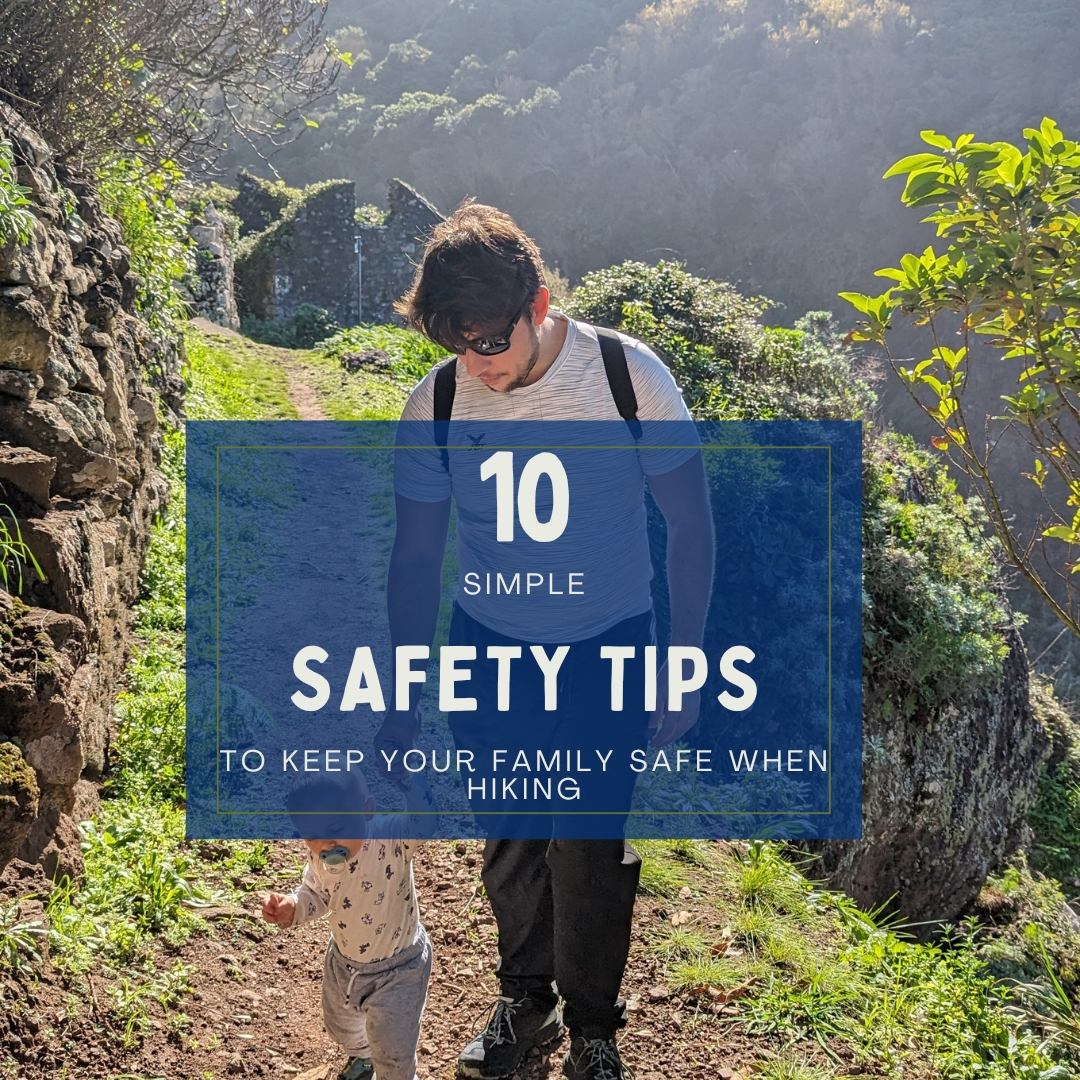
The island of Madeira is currently in a state of shock following the disappearance of a French couple while on a short hike near our home. It’s a weird time to hike solo with a baby, but each year, millions of people enjoy the great outdoors without disappearing or serious injury.

My family and I love hiking – it’s our favorite activity on Madeira. I’ve been hiking since I was a tot myself, and my father taught me these 10 principles of outdoor safety that have kept me safe.
Some of these measures are a little extreme for a short two-hour hike on a high-traffic, easy trail, but, as we’ve learned on Madeira, there is no such thing as an easy hike.
Have a Plan
By nature, I’m a spontaneous person. But this spontaneity can be dangerous when experiencing the great outdoors. It’s vital to create and stick with a plan when going on a hike, especially when hiking solo with a baby.
Plan Your Hike
Before I go on any hike alone, I map out which trail I’m going to take and any possible backup trails, in case my original trails are closed, harder than anticipated, or washed out. I then tell my husband, if he’s not joining us, where we’ll be hiking and when I plan to return. This way, if something happens, he knows roughly where to look.
If my husband and I are hiking together, we text a friend our planned route and when we expect to be home. Even though this friend isn’t on the island, they still know who to call if we don’t get in touch at the agreed-upon time.

Emergency Plan
Another key plan when hiking is to discuss proper etiquette in case of an emergency. Everyone should know what their role is, that way, you won’t have to discuss how your partner should get help when you’ve fallen and broken your leg.
These are the key elements of your emergency plan:
- Will we have cell service – who is bringing a fully charged phone (and portable charger for longer hikes?)
- If not, who is bringing an alternative device capable of contacting emergency services?
- What number should we call in case of an emergency?
- If we can’t get a message through either a phone, radio, or PLB, who will go get help?
My husband and I have an untested emergency plan – the injured stays put, and the other gets help. Even if the injured person has fallen off a cliff, near the ocean, or off a tree – we are hiking with a baby, and keeping him safe is our number one priority.
Have a rough plan of your hike before heading out on the trail. Make sure you know how to react in case of an emergency.
Hike with a Buddy
Having another (adult) hiker with you means there’s at least one person who can go get help in case of an emergency. We don’t always follow this rule – my husband works during the week, and the baby and I enjoy hiking together. When hiking solo with the baby, I adapt the buddy rule; I stick to relatively high-trafficked trails where I know I’ll encounter another hiker (or two) in case of emergency. I also share my live location with my husband per Whatsapp, just in case.
Although I love stumbling across an empty trail and getting lost in nature, safety comes first – especially when hiking solo with a baby.
Do Your Research
Thorough research can prevent many of the dangers involved with hiking. Knowing about the plants and animals you may encounter while hiking is essential for keeping you and your family safe. Dangers, both big and small, can lurk in the woods.
Here are some things you should research before setting out on your hike:
- Are there any dangerous animals we might encounter like bears, mountain lions, or wild boar? How should we react when facing these animals?
- What plants are poisonous to touch, or eat?
- What are the tidal patterns if hiking near an ocean, estuary, or tributary stream? Will we be able to return the same way we hiked in, or will we be caught in an incoming tide?
If you’re hiking in national or state park, both domestic or foreign, there will be a Parks and Recreation department responsible for that particular trail. Contact them before you begin your hike, or while you’re planning a hike, especially if you’re planning a multi-day long trek. These rangers are experts about the area they patrol and can give you amazing insight into any dangers you might encounter, unexpected trail closures, and weather conditions. As a bonus, professional rangers now know when and where you’ll be hiking in case of emergency.
Another way you can research your hike is by purchasing guidebooks and blogs. Just be warned: My definition of an easy trail is not AllTrail’s—they define my hard as easy!
I love hiking with the PlantNet app. It allows me to identify three plants every day for free or unlimited plants with a subscription. Knowing which plants I can eat may seem unnecessary, but knowing which plants I (or the baby) can’t eat is a literal lifesaver.
Know Yourself (And Your Limits!)
No matter where you’re hiking, there will be varying trails suitable for all hiking and fitness levels. Be honest about your abilities (or lack thereof) before hitting the trail. Choosing a more accessible trail is nothing embarrassing; easy doesn’t mean dull.

Things to look for when choosing a trail:
- Elevation. Does this trail have a significant change in elevation? That means a climb up or down a steep hill (or a long, gradual uphill climb). Am I physically fit enough for this climb?
- Skill Level. Is this trail classified as easy, moderate, or hard? How experienced a hiker am I?
- Environment. Have I ever hiked in this environment before? Extreme heat, humidity, cold, or high altitudes can make even the most experienced hikers weak in their knees.
Check the Weather
The weather. Germans love to say there is no bad weather, only bad clothing. While this is true to a certain extent, extreme weather even forces the most extreme hikers to stay indoors. We use Windy to check the weather – I’m more than a little obsessed with their 15+ layers of weather conditions.

Checking the weather isn’t only a reason to cancel a hike – knowing what the weather will be like helps you make informed packing decisions. If your area is going through a heat wave, you probably won’t need an extra insulating layer but extra sun protection.
Take Supplies with You
We’re big fans of packing proper supplies, no matter where our day will take us. For a basic plan of what a baby needs, check out my blog on the Go-Bag – our baby essential kit. However, when hiking, especially in remote areas, there are a couple of additional supplies you need to bring with you.
Day Hike Supplies

I’ll be honest – being prepared for an emergency is great, but if you’re going on a short hike in a well-trafficked area, you’ll need food, water, diapers, and other supplies – but not all of the emergency supplies.
This is up to you, however. The more things you bring with you, the higher the chances you’ll be okay in an emergency. 40% of wilderness rescues in the USA were of dayhikers – so it won’t hurt to prepare a little bit.
Water Bottle
Snacks (1 per hour per family member + emergency snacks)
Baby Hygiene Supplies (diapers, wipes, trash bags)
First Aid Kit
Emergency Kit – Space Blanket, Waterproof Matches, Compass
When we were kids, my family went on week-long backpacking trips. My father packed small ziploc baggies for each family member containing a space blanket, waterproof matches, a small mirror, and a compass. We kept these in our pockets at all times.
10 Essentials
If you’re hiking on a new trail, through a vast wild area, or somewhere you know could be dangerous or confusing, I recommend packing the 10 essentials.
This list may seem a little extreme for a basic day hike, but if you go off-trail (which you shouldn’t) or into a low-traffic area, these essentials could save your life. 90% of rescues in the Smoky Mountains are of day hikers, not backpackers.

- Navigation
- Map of the area, compass, and/or GPS system.
- Sun Protection
- Sunscreen, sunhat, sunglasses
- Insulation
- Climate appropriate additional layer for warmth (raincoat, gloves, hat, down jacket)
- Illumination
- First Aid Supplies
- First Aid Kit, Necessary Medication – enough for at least 1 additional day.
- Fire
- Waterproof Matches, Lighter, Fire Starter
- Nutrition
- Food – Enough for 1 additional day
- Hydration
- Emergency Shelter
- Tent, Bivy, Tarp, Space Blanket
Don’t Rely On Your Phone
This tip is important for everyone – not just hikers! Our phones are incredible pieces of technology that have slowly replaced everything else in our lives. My phone has a compass, GPS system, trail maps, road maps, flashlight, emergency beacon, and the internet within a few swipes and taps. However, rain, a fall, an unexpectedly long hike, and a myriad of other issues can cause a phone to become absolutely unreliable.
Do not rely on your phone as your sole navigational tool, sole source of illumination, or the only way to get help.
Even if you bring a solar charger, you can still end up in an area without cell service, a shoddy GPS signal, or dropping your phone and shattering the screen.

Wear Proper Clothing
Dress for success applies to all aspects of life, even hiking! Wearing weather-appropriate clothing will not only make you feel more comfortable when traipsing around the wilderness, it can help prevent blisters, sunburn, heat exhaustion, hypothermia, blisters, rolled ankles, and insect bites.

I honestly don’t know how many tourists I’ve seen conquering one of Madeira’s impressive hikes in sandals or dress shoes. Probably about as many tourists as I’ve seen wipe out when they slip in the mud, or lose a shoe to a levada. Wearing rubber-soled shoes will not only save your ankles, it’ll make hiking seem a lot easier.
Don’t Be Afraid to Turn Back

This is the most sobering rule I’ve had to learn when hiking as a mother. I used to pride myself on my physical fitness and a stubborn streak. However, when hiking with a baby, there are some trails I cannot complete. Some hikes are much more difficult than I expected, or I started the hike too late, trail conditions may be horrible, or the baby is extraordinarily uncooperative.
Whatever your reasons, don’t push through if you don’t have to. Sometimes, the goal of a hike was to get outdoors and slow down in nature. My husband and I have coined the rule of three: If we say, “Should we turn around” three times, we do. No matter what. We’ve ignored that rule twice, only to hike back to the car in the rain or with a hysterical baby.
Be Extra Careful on the Way Back
Once you have turned around, be careful. Most accidents, slips, or falls happen during the second half of a hike. You’re both physically and mentally tired and probably thinking about dinner, a shower, or the drive home. Take plenty of breaks and pay attention to where you put your feet.
Learn Basic Survival Skills
Certain skills are an absolute must for all humans. These include but are not limited to, basic first aid, basic navigational skills, knowledge of the plants and animals around us, and the basics of wilderness survival. These skills become even more essential when you start spending time in the great outdoors – or have kids.
Basic First Aid
Basic first aid, such as how to clean wounds, deal with a minor concussion, split a sprained appendage, and bandage burns, is an essential life skill—especially when dealing with children. Knowing how to handle minor injuries is a skill I use daily as a preschool teacher and as a clumsy adult!

Basic Navigational Skills
We should not all be able to chart a path across the Atlantic by using the stars as our navigational tools, but with the onset of the digital age, fewer people can read a map or use a compass. Knowing basic navigational skills can be helpful, especially if you’re lost in the woods and your phone is out of battery.
Knowledge of the World Around Us

While being able to identify every plant and animal around us is a cool, but probably unattainable, goal, I think it’s vital to understand the climate we’re in, especially when venturing out into nature. Understanding weather patterns, like how quickly storms can appear, being able to identify poisonous plants, and knowing how to deal with wildlife encounters can prevent most accidents. I constantly read stories about tourists in Thailand being bitten by monkeys or geckos. Thai locals know to stay away from the wildlife, but tourists get too close. And pay the price!
Wilderness Survival
I’m not advocating for advanced bushcraft skills, but the amount of people who can’t build a fire (even with a lighter), find shelter in case of a storm or understand the dangers of standing out in an open field during a lightning storm is simply shocking. Basic wilderness survival skills like finding water sources, sheltering from inclement weather, and heading to high ground (or a bug-out point) to make rescue easier are not only useful, but build confidence. Knowing you’ll be okay for a day or two in the woods gives you an entirely different feeling of belonging when you go on a hike.
Stay On The Trail

If you want to prevent accidents, emergencies, or unplanned overnight visits in the woods, stay on the trail. There are countless cases of experienced hikers taking a few small steps off the trail to find a viewpoint, look for a campsite, or use the bathroom and getting lost.
There are so many reasons why all hikers should stay on the trail—both for their safety and the conservation of the natural habitat around them—but for now, I’ll concentrate on personal safety.
It is incredibly easy to get turned around in the forest, lost in the desert, or disorientated in the jungle. Stay on the trail. As a bonus, trails typically smell like people, a scent that deters many dangerous wild animals, like bears, mountain lions, and snakes.
Get Outside!
The point of this blog isn’t to scare would-be adventurers away from the outdoors but to motivate them to enjoy getting outside responsibly. Like any adventure, proper preparation can make a huge difference between enjoying a day hike and suffering through one.
Spending time outdoors benefits us in so many ways. Mentally, physically, and intellectually.
Although some of these tips may seem a little extreme for a short tour in the woods, I would rather be overprepared for an emergency that never happens than underprepared for one that did.



Leave a Reply