
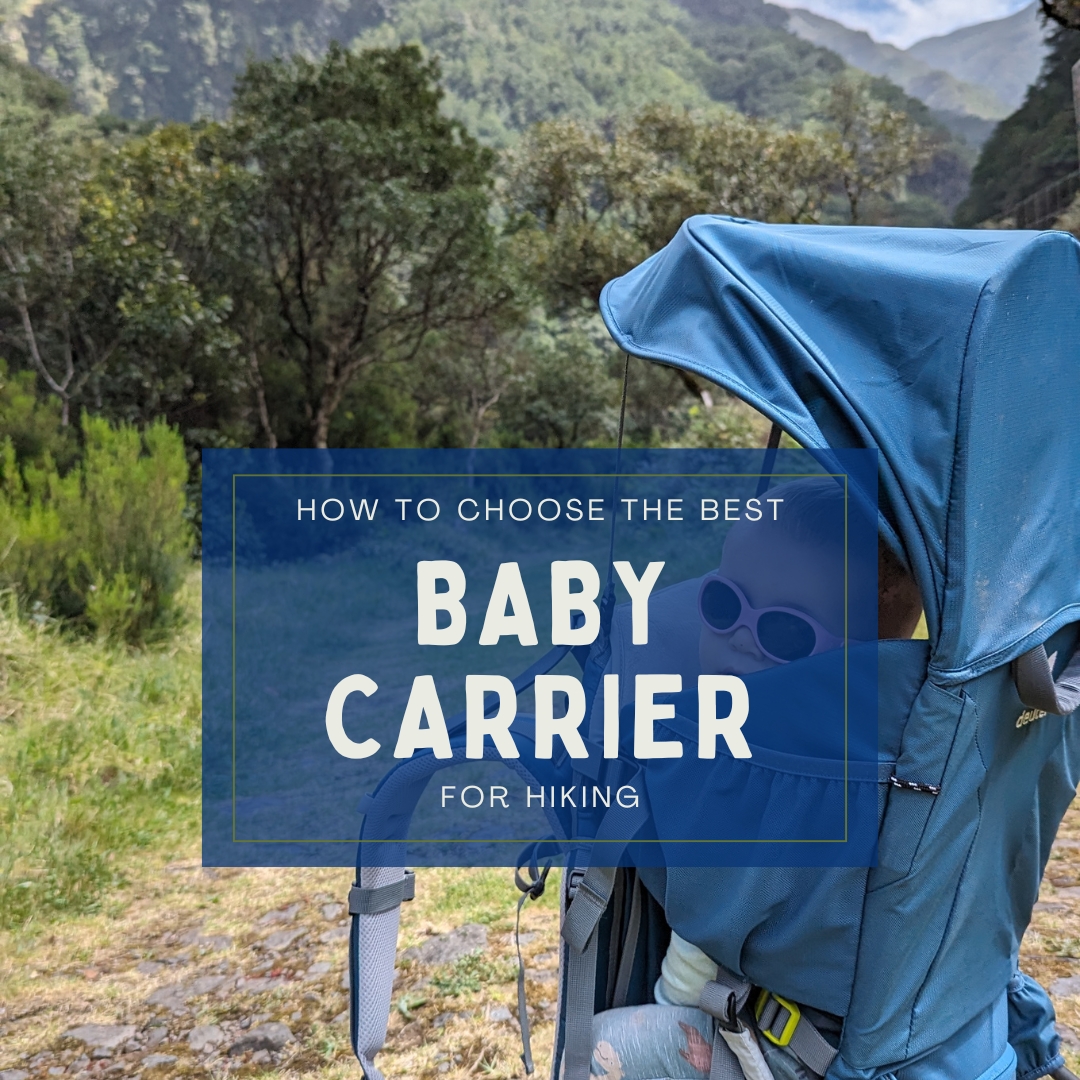
If you’re looking to hit the trails with your baby or toddler, you need to pick the right carrier for your family’s style of hiking. I learned the hard way – we snagged a Kelty carrier secondhand on Facebook Marketplace for $20. Thinking it was a great deal, I picked the carrier up without testing it out first. It turns out, the angle of the carrier was incompatible with my shoulders and I tore my rotator cuff after a few hikes!

Trying out new carrier types is easier than you think.
For wraps, slings, and soft carriers, try out your local Baby Consignment shop. For hiking backpacks, hiking stores, like REI, are your best bet.
If you have friends who already own various carriers, ask to test theirs out. We wanted to purchase a Minimeis carrier, but after testing one out, it was apparent my dude had outgrown the carrier.
This blog contains affiliate links. Clicking on any links and making a purchase may result in me receiving a small payout. Thank you for being so supportive!
Types of Child Carriers
The world of baby-wearing is intimidating at first. There are so many different styles of carriers, brands, and recommendations online. Don’t worry, choosing the right carrier for your family is simpler than it seems.
You need to know:
- What will you be using the carrier for?
- How old is your child? How strong is their neck?
If you’re unsure which carrier is right for you, take this quiz from Baby Tula to find your perfect fit.
Here are the main kinds of carriers:
Ring Slings
Ring slings are essentially a long piece of fabric with two metal or wooden rings at one end. They are worn across the body and suitable for newborns, infants, babies, and toddlers.
Slings allow hands-free carrying of younger children, and you can quickly move the baby in and out. But, they aren’t very ergonomically friendly for your back. Slings put the entire weight on one shoulder.
Ring Slings are best for:
- Short walks or running errands. Slings can be uncomfortable for extended periods and may be detrimental to your back. They are convenient in grocery stores or airports.
- Children of all ages. Slings are practical for infants, babies, toddlers, and any child of any age who still occasionally wants to be carried.
We did not use a Ring Sling. My experiments with a messenger bag in high school left me slightly traumatized about one-shoulder carries.
Woven and Soft Wraps
Watching influencers wrap their babies in the most intricate ways possible is intimidating, but I have great news. Wrapping your baby is relatively straightforward.
Wraps can be worn on hikes, but aren’t very practical. They need to be tightened each time you take your child out and in, and they trap heat, making both the carrier and the infant feel warm.
Wraps are best for:
- Young babies. We used our wrap until the baby was 8 months old. After that, he liked to hop out of the wrap and explore independently, making the wrap inconvenient.
- Non-strenuous activity. Any activity with a baby is strenuous, but for longer, uphill hikes, I don’t recommend taking a wrap. Use a lightweight carrier or hiking backpack for those.

I used this Moby Wrap.
Frameless, Soft-Structured Carriers
The most common type of baby carrier is the soft-structured one. Brands like Ergobaby, TulaBaby, and BabyBjorn have been around for decades.
There are differences between various carriers – some have padded straps, others cross over the back to distribute the baby’s weight equally. Most carriers allow the baby to be carried both forward-facing and backward-facing, and some have a hip pad to help distribute the weight off the carrier’s shoulders.
Soft carriers are a great, portable option for hiking, especially with younger babies or older toddlers. They are easy to remove for quick diaper changes, and allow toddlers to frequently hop in and out of the carrier without the readjustments needed in a wrap.
Soft Carriers are best for:

- Non-mobile babies or older toddlers. Carriers are easy to remove and reattach. This is a great option for older toddlers who want to hike, be carried, and hike again. All in 4 minutes.
- Shorter hikes. Soft carriers don’t distribute a baby’s weight as evenly as structured hiking carriers. They also seldom have room for storing more than a diaper and wipes. No Snacks!
I will not leave the house without my Tula Baby Carrier. Period.
Structured Backpack Child Carriers
Essentially a backpack but with a seat for a baby, backpack carriers are built for long days (and nights) outside. They’re designed to make hauling more weight (aka snacks) feel lighter and easier than in a regular backpack.
Backpacking child carriers allow parents to adjust the torso length, feature comfortable padded waist belts, and provide enough storage space for you to go on a day hike solo with your baby.
Structured Backpack Carriers are best for:

- Long or strenuous hikes. These carriers are the GOAT for more strenuous or adventurous hikes. They spread your child’s weight evenly across your body, making it easy to hike.
- Older babies/Younger toddlers. Hiking packs are difficult to put on and take off repeatedly, so older toddlers who enjoy walking independently may struggle. Babies must be able to sit independently before being placed in a hiking carrier. (between 6-8 months of age).
We love our Deuter Kid Comfort Pro.
Exactly What You Should Look For In A Carrier
Choosing the correct type of carrier is a personal decision. The hiking your family plans to do (are you going up and down the hilly streets of Porto or deep into the Icelandic wilderness?), as well as the practical aspects of the carrier, are only part of the things to look for.
We’ve found that a soft carrier is a must-have for travel.
Our Tulababy has comfortably carried our toddler through the rugged jungles of Thailand, around the hills of Madeira, over the French Alps, and through countless airports.
However, it’s not very comfortable for long hikes. This is why we also travel with our Deuter Kid Comfort Pro.

Child’s Developmental Stage
The first three years of childhood are a whirlwind for parents. Before we knew it, our tiny newborn was sitting up independently, and shortly after that, he was demanding to be put down and crawl along the trails beside us.

When trying on carriers, ask yourself:
Can my child sit independently for long stretches of time?
Does my child need a carrier that is easy to remove and put back on?
Can I wear this carrier without any assistance?
Does this carrier support my baby’s head and neck?
Using our Tulababy on short hikes and day trips has been a game-changer. Now, I can easily set my son down to explore independently, and repack him when he demands to be carried again.
Weight Distribution and Comfort
Schlepping your wiggly baby up a mountain is no joke – especially once you add in the weight of a water bottle, snacks, change of clothes, and diapers. You need a pack that fits your body. Don’t be distracted by marketing tactics, unnecessary convenience features, or an appealing color.
When trying on carriers, ask yourself:
- Does this carrier distribute my child’s weight acvross my hips and shoulders evenly?
- Do I feel any pressure in any one spot on my body? If so, can I adjust the straps of the pack to redistribute the weight?
- Does this carrier have breathable or waterproof fabric, depending on your location

A good hiking pack (and baby carrier) is comfortable from the get-go. Yes, you’ll need to adjust the straps a bit to find the sweet spot, but if you put the pack on and feel a twinge of discomfort, it’s not for you. Trust me, four miles into the hike that twinge turns into a major pain.
Child Comfort
Your child is not shy about sharing their discomfort. They’ll let you know if a pack is uncomfortable! Just to let you know – my son cried every time we placed him in a hiking carrier, until I picked him up and walked around the store.
Ask yourself:

- Was I able to clip my child into this carrier without pinching them?
- Does this carrier support my child’s head and neck in case they fall asleep?
- Does the cockpit, the space where my child sits, look comfortable to me?
My general rule is: We keep it if my kid falls asleep in it. If he sleeps, it’s comfortable.
Child Safety
Safety is my top priority when hiking as a family. This begins with the correct carrier. Picking your toddler up in a hiking carrier involves swinging them around your body and up to your shoulders – they need to be securely fastened in the cockpit to prevent injury.
Ask yourself:
- Do the harness buckle easily and securely? Can my toddler undo the buckles themselves?
- Does the pack feel secure? Can my child slip out?
- For babies under 1 year: Are my child’s legs in the “M” position? (Knees slightly higher than their hips).
- For toddlers: Can my child rest their legs in stirrups and bend their knees in the carrier?
If you’re unsure about the seating position of your child in the carrier, take a picture of them sitting in it and ask your pediatrician at their next visit. Because, with kids, a visit to the doctor for an unexpected illness really is a monthly activity.
Size and Packability
Depending on your carrier needs and hiking plans, you don’t always need a bulky hiking carrier. If you plan to wander the streets of Europe, keep your little one safetly on a moped in SEA, or explore your local neighborhood, a soft carrier is perfect for you. These are light, easily foldable, and fit into most backpacks.
If you plan to go on longer or challenging hikes, you’ll need a hiking pack. We’ve had great success checking our hiking carrier as a baby item on most airlines. We package our hiking carrier in this stroller bag and check it in at the airport as a stroller. After all, we use it instead of a stroller!
Ask yourself:

What will I be using this carrier for? Hikes or to carry my baby around town?
Will we be traveling a lot with the carrier?
We travel full-time and bring both my Tulababy and Deuter Kid Comfort Pro. I prefer not to use the Deuter in towns and cities, but it’s essential for long or challenging hikes.
Extra Features to Look For In a Hiking Carrier
The biggest difference between soft carriers and hiking carriers are the accessories. Soft carriers often don’t have storage space, but many do come with a sunshade. I’ve found that a sunshade is a must-have accessory for hiking carriers and soft carriers. My son frequently naps in his carrier and closing the shade allows him to fall into a deeper sleep.
Ask yourself:
- Will I be using this carrier for on-the-go naps?
- Will we be hiking in the rain or will we forgo a hike due to bad weather?
- Will I have a hiking buddy who can get my water bottle out of the carrier/backpack or do I need a carrier with a water bladder?
When hiking solo, I often struggle with dehydration. Our Deuter is amazing, but doesn’t have a built-in water bladder pouch, so when I want to drink, I have to take off the carrier.
Remember your “Why” when Hiking With Babies and Toddlers
Sometimes, even the perfect carrier, ideal weather, and amazing snack selections aren’t enough to motivate your family to reach the summit. Family hikes aren’t about breaking PR’s, summiting the mountain, or even “finishing” a hike.

Family hikes are about creating memories, spending time outside together, and fostering a love of the outdoors in our kids. Keeping yourself (and your family) focused on enjoying the hike rather than finishing it is the best way to make family hikes enjoyable. For everyone!




Leave a Reply